Motorcycle Carburetor Service — Orange, CA
Carb Cleaning
& Rebuild.
Bike been sitting? Varnish clogs jets and passages — causing hard starts, rough idle, and poor throttle response. We disassemble, ultrasonic clean, rebuild, and re-tune. Most bikes back same day.
The Basics
What Is a Carburetor and Why Does It Matter?
Before fuel injection became standard in the early 2000s, every motorcycle engine used a carburetor to mix air and fuel. The carb is a precision mechanical device — a series of small jets, passages, needles, and floats that work together to deliver exactly the right fuel mixture to the engine at every throttle position.
When everything is clean and in spec, a carbureted bike is a joy to ride. When the carb is dirty or out of tune — which happens almost inevitably when a bike sits — the engine stumbles, won't idle, bogs under throttle, or won't start at all.
Why carbs are so sensitive to sitting
Modern gasoline — especially ethanol-blended fuel — breaks down in as little as 30 days when left in a carburetor. It evaporates, leaving behind a sticky varnish residue that coats the inside of the carb and clogs the tiny jets and passages. The passages in a carburetor are smaller than a human hair. It doesn't take much varnish to shut down a jet completely.
Signs Your Carb Needs Service
The Sitting Problem
What Happens to a Carburetor Over Time
Most riders underestimate how quickly fuel degrades — especially with today's ethanol-blended gasoline. Even a few months of sitting is enough to cause carburetor problems. Here's the timeline:
30 Days — Fuel Starts to Degrade
Modern pump gas begins to oxidize and separate. Ethanol attracts moisture. If the bike doesn't run for a month, the fuel sitting in the float bowl has started to go stale.
60–90 Days — Varnish Begins to Form
The light components of the fuel evaporate, leaving behind a tacky varnish coating on internal surfaces. Pilot jets — the smallest passages in the carb — start to restrict.
6 Months — Significant Blockage
The varnish hardens into a shellac-like residue. Pilot jets are likely fully blocked. Float bowl has a visible orange or brown coating. The bike will struggle to start or run.
1 Year+ — Full Carb Rebuild Required
Multiple circuits blocked, rubber components degraded, float may be stuck or damaged. A full disassembly, ultrasonic clean, and rebuild with new gaskets and jets is the only fix.
We Revive Bikes That Have Been Sitting for Years
We see bikes come in that haven't run in 5, 10, even 15 years. Garage finds, estate bikes, project bikes that never got finished. If the engine is mechanically sound, a proper carb rebuild is usually all it takes to bring it back to life.
Our Process
How We Clean and Rebuild a Carburetor
We don't spray carb cleaner in the jets and call it done. A proper carb service means full disassembly, ultrasonic cleaning, inspection, and reassembly with fresh components.
Full Disassembly
The carb comes completely apart — float bowl, jets, needle, slide, emulsion tube, pilot screw, and all internal components. We document everything as it comes off.
Ultrasonic Cleaning
All metal components go into the ultrasonic cleaner — high-frequency sound waves blast varnish, deposits, and corrosion out of passages that a brush or spray can't reach.
Inspect & Replace
We inspect all rubber components — O-rings, gaskets, float bowl seal, and needle jet. Anything degraded gets replaced. Jets are checked against spec and replaced if worn.
Reassemble & Tune
Reassembled to spec, reinstalled on the bike, and tuned. We set idle speed, air/fuel mixture, and throttle response and confirm it runs correctly before it leaves our shop.
Bikes We Service
Which Bikes Need Carburetor Service
If it was built before fuel injection became standard — roughly 2001 for Japanese bikes and 2007 for Harley-Davidson — it has a carburetor. Here's what we see most often:
Carbureted Harleys
Harley-Davidson used carburetors through 2006 on most models — the Keihin CV40 carb was standard on Evo and early Twin Cam bikes. These carbs are robust but need cleaning when the bike sits. Sportsters through 2006, Big Twins through 2006 — we service all of them.
Japanese Cruisers & Standards
Shadow, V-Star, Vulcan, Boulevard, CB750, XS650 — classic Japanese bikes that are beloved for their reliability but still need carb service after sitting. Many have multiple carburetors per cylinder which adds complexity we handle routinely.
Dirt Bikes
Dirt bikes sit between seasons and the carb is almost always the first casualty. KTM, Honda CRF, Yamaha YZ, Kawasaki KX, Suzuki RM — two-stroke and four-stroke. We clean and rebuild them all and re-jet if needed for your riding conditions.
Vintage & Classic Bikes
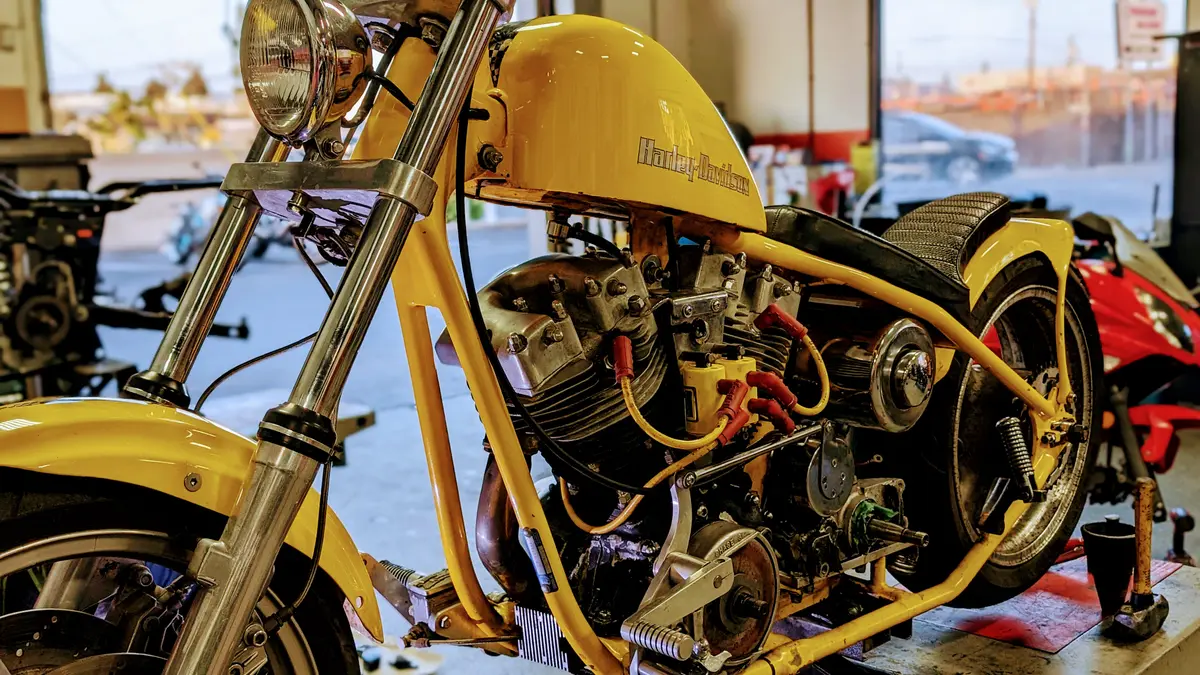
Shovelheads, Panheads, vintage Hondas, British bikes — older carbs are simpler in some ways but require careful handling. We work on vintage carbs and can source rebuild kits for most classic bikes. The yellow Harley in our photo is proof we love this stuff.
Custom & Project Builds
Project bike that's been in pieces for two years? Garage find that needs to run again? We sort out carbureted customs and project bikes regularly — diagnosis first, then a clear plan of what it needs.
Quads & ATVs
Carbureted ATVs suffer the same sitting-fuel problems as motorcycles. Yamaha Raptor, Honda TRX, Kawasaki KFX — four-wheelers that won't start after a season in the garage usually just need the carb cleaned.
Why MTC
Carburetor Experts, Not Parts Swappers
Ultrasonic Cleaning
We use an ultrasonic cleaner — not just spray carb cleaner. It reaches passages too small to clean any other way. The difference in results is significant.
Fast Parts Sourcing
Most carb rebuilds require a rebuild kit — gaskets, O-rings, needle jets, and float valves. We source parts quickly and get your bike back to you as fast as possible. We'll give you a realistic timeline upfront.
Runs Right Before It Leaves
We don't hand you back a bike and say "it should be fine." We start it, warm it up, set the idle and mixture, and confirm it runs correctly before you pick it up.
Vintage & Multi-Carb Experience
Four-cylinder bikes with four carbs, vintage British singles, two-strokes — we've seen it all. We don't turn away unusual or complex carb jobs.
Common Questions
Carburetor Service FAQ
Bike Running Rough?
Most carb rebuilds done in 1-2 days. We get you running right again — and tuned for the way you actually ride.