Tire Guide
Bias-Ply vs Radial Motorcycle Tires, Explained
“Bias” and “radial” describe how a tire's internal plies are laid out. It sounds technical, but it directly shapes how the tire flexes, handles heat, and what riding it's built for. Here's the difference in plain terms.
The Construction Difference, in Plain Terms
Every tire is built from layers of reinforcing cord (the “plies”) wrapped at an angle across the tire, then coated in rubber. The difference between bias and radial comes down to that angle:
- Bias-ply — the plies run diagonally, criss-crossing from bead to bead, layer over layer. This crosshatch pattern makes the whole casing — tread and sidewall together — stiffer and more unified as one structural unit.
- Radial — the plies run straight across, roughly 90° to the direction of travel (radiating out from the center like spokes — hence “radial”), usually reinforced with an additional belt under the tread. This lets the sidewall flex somewhat independently of the tread.
That single difference in ply angle is what drives every practical difference below.
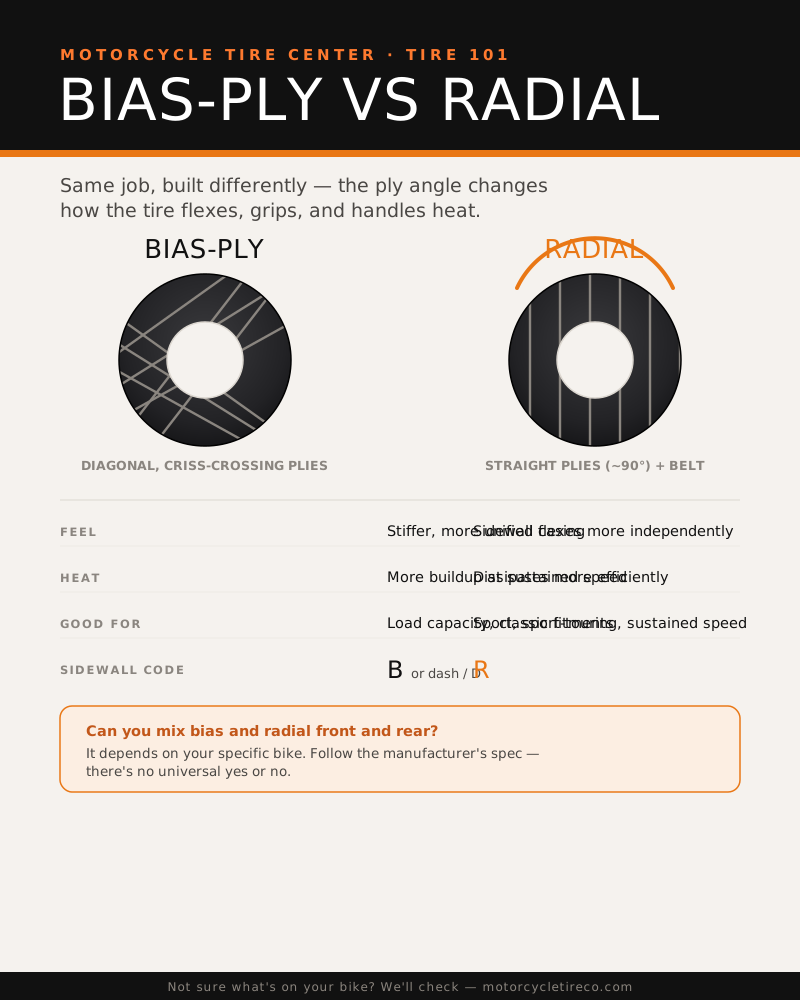
Bias-Ply: Stiffer Sidewall, Load Capacity, Classic Fitments
Because the crosshatched plies make the sidewall and tread act as one stiffer unit, bias-ply tires tend toward:
- Strong load-carrying ability relative to their size — a big reason they're common on heavier cruisers and touring bikes designed to carry weight.
- A stiffer, more planted feel at lower speeds and around town.
- Classic and vintage-correct looks and fitments — many older bikes and classic-styled cruisers were designed around bias-ply tires and sizing (including inch and alphanumeric sizes — see How to Read Your Motorcycle Tire Size).
- More heat buildup at sustained higher speeds, since the stiffer, more interlocked casing flexes less efficiently and generates more internal friction than a radial.
Radial: Heat Dissipation, Grip, Higher-Speed & Sport Use
Because the sidewall can flex more independently of the tread, radial tires tend toward:
- Better heat dissipation at sustained speed — the more efficient flex generates less internal heat buildup, which matters a lot on longer, faster rides.
- A larger, more stable contact patch through corners, since the tread stays flatter to the road as the sidewall flexes — a big part of why radials dominate sport and sport-touring applications.
- Consistent grip at higher speeds, which is why nearly all modern sportbikes and most touring bikes designed for sustained highway speed run radials.
Can You Mix Bias and Radial? Follow the Bike's Spec
This is the question riders actually search for, and the honest answer is: it depends on your specific bike, and you should follow the manufacturer's spec — don't improvise.
- Bias and radial tires flex differently, which changes handling characteristics front-to-rear. Mismatching them can create unpredictable handling, especially in corners or under hard braking.
- Some manufacturers explicitly permit certain mixed setups on certain models; others explicitly do not. This varies enough by bike that there's no universal yes or no that applies to every motorcycle.
- The safe approach: check your owner's manual, ask the manufacturer, or ask us before running a bias front with a radial rear (or vice versa). If your bike came from the factory with matched construction front and rear, that's the baseline to stay with unless you've confirmed otherwise.
How to Tell Which You Have
Look at the tire's sidewall code — the same string that shows the size (see How to Read Your Motorcycle Tire Size for the full breakdown):
- R in the code (e.g., 180/55ZR17) = radial.
- B = bias-belted.
- A dash, D, or no letter at all in that position = bias (cross-ply).
That single letter tells you exactly what's on your bike right now — check both front and rear, since they should generally match unless you've specifically confirmed a mixed setup is approved for your model.
Not Sure What's Right for Your Bike?
Construction type is one more thing that has to match your bike's spec — like size, load index, and speed rating. If you're deciding by riding style, a guide to choosing cruiser vs sport vs touring tires is coming soon. In the meantime, if you're not sure what you're running or what you need, we'll check and get you the right fit.
Frequently Asked Questions
What's the difference between bias-ply and radial motorcycle tires?
It's the angle of the internal reinforcing plies. Bias-ply plies run diagonally and criss-cross, making the tread and sidewall act as one stiffer unit. Radial plies run roughly straight across (radiating out like spokes), letting the sidewall flex more independently of the tread. That difference drives everything else — heat handling, grip, and feel.
Can I mix bias and radial motorcycle tires?
It depends on your specific bike — follow the manufacturer's spec rather than a blanket rule. Some bikes permit certain mixed setups, others don't, and mismatching can create unpredictable handling. Check your owner's manual or ask us before mixing constructions.
How do I know if my motorcycle tire is bias or radial?
Check the sidewall code. An R (as in 180/55ZR17) means radial, a B means bias-belted, and a dash, D, or no letter in that position means bias (cross-ply).
Why do sportbikes use radial tires?
Radials dissipate heat more efficiently and hold a larger, flatter contact patch through corners as the sidewall flexes, which gives more consistent grip at higher speeds and lean angles — exactly what sport riding demands.
Why do some cruisers still use bias-ply tires?
Bias-ply construction's stiffer, unified casing tends to carry load well and suits classic sizing and vintage-correct looks, which fits how many cruisers and touring bikes are designed and equipped from the factory.