Tire Guide
How to Check Your Motorcycle Tire's Age (DOT Date Code)
Tread isn't the only thing that wears out — time does too. Every tire tells you exactly when it was built, right on the sidewall. Here's how to find that date and read it in about ten seconds.
Why Tire Age Matters — Even With Good Tread
Rubber is a chemical compound, and it changes as it ages whether you ride or not. Over the years the compound hardens, the oils that keep it flexible dry out, and fine cracks can start to form — a process called dry rot. A hardened tire grips worse, especially in the cold and wet, and is more prone to cracking.
That's why age is its own clock, separate from tread depth. A tire that's been sitting on a low-mileage garage-kept bike — or a “new” tire that actually spent years on a warehouse shelf before it was mounted — can be aged out while still looking fine. On a motorcycle, where your entire contact patch is two small ovals of rubber, that matters more than it does on a car.
Where to Find the DOT Code on Your Tire
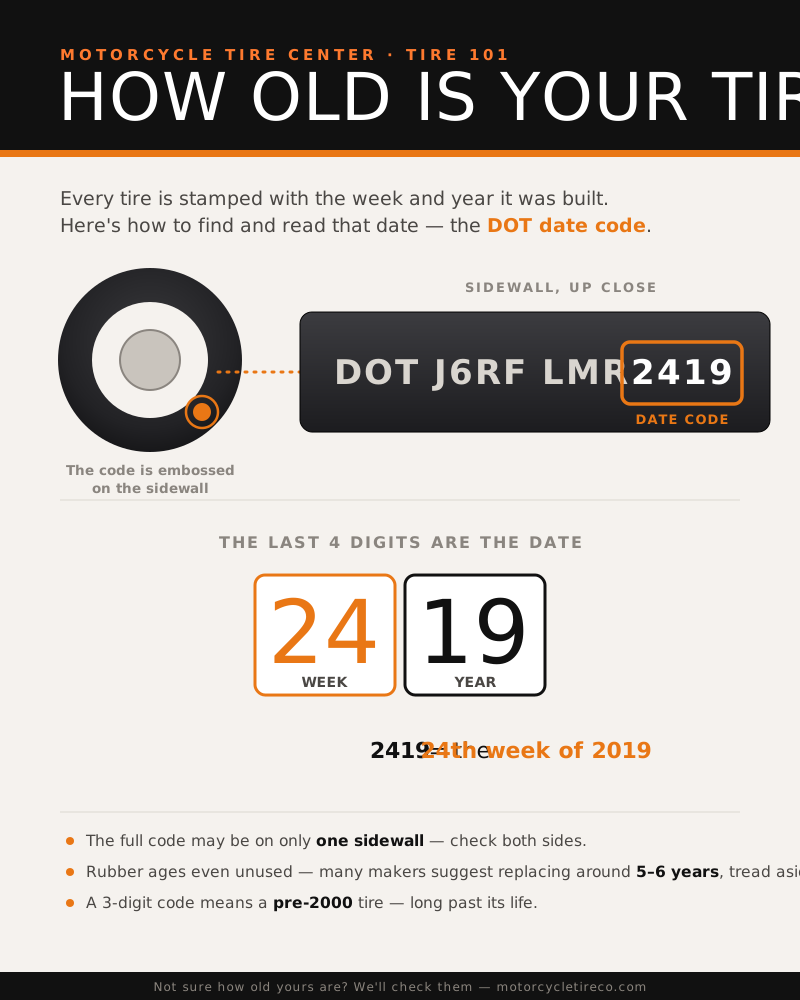
Look on the sidewall for a string that starts with the letters DOT, followed by a series of numbers and letters. That whole string is the tire's identification number; the part you care about for age is the last four digits.
One detail trips a lot of riders up: the full DOT code is often only complete on one side of the tire. Manufacturers are only required to put the entire code (including the date) on one sidewall — the other side may show a shortened version without the date. So if you find a DOT stamp that ends before four date digits, check the other sidewall. On a mounted tire you may have to roll the bike forward or turn the wheel to bring the stamp into view.
Don't want to do the math? Our Tire Age Decoder lets you type in your DOT code (or just the last 4 digits) and tells you how old the tire is and whether it's worth a closer look.
Decode your tire's age
Enter the DOT code, or just the last four digits.
How to Read the Last 4 Digits (Week + Year)
The last four digits of the DOT code are a date stamp — read them in four quick steps:
- Find the DOT string. On the sidewall, locate the identification string that begins with the letters DOT.
- Go to the last four digits. Ignore the rest of the code — only the final four digits carry the build date. If your side ends sooner, check the other sidewall.
- Read the week, then the year. The first two digits are the week of the year the tire was built (01–53); the last two digits are the year.
- Translate it. A code ending in 2419 was built in the 24th week of 2019 — roughly mid-June 2019. A code ending in 0522 means the 5th week of 2022.
That's the whole system: two digits for the week, two for the year.
Older Tires: The 3-Digit Code
Tires built before the year 2000 used a three-digit date code instead of four — the last digit was the year within that decade. This system was unreliable, and it's largely academic now: if you find a 3-digit DOT date code, the tire is more than 25 years old and long past any reasonable service life. Replace it before riding.
The Age Guideline: When Age Alone Says “Replace”
There's no single legal expiration date on a motorcycle tire, but there is well-established guidance. Many tire manufacturers suggest that tires be inspected more closely once they pass about five years of age, and consider replacement around the five-to-six-year mark regardless of remaining tread — with an outer limit that most makers put at around ten years from the date of manufacture, no matter how good it looks. Treat that as a guideline, not a hard rule:
- Under ~5 years, good tread, no cracking: generally fine — keep an eye on it.
- ~5–6 years: worth a real inspection even if the tread looks healthy.
- Older than that, or any visible cracking/hardening: time to seriously consider fresh rubber.
Age is one factor among several — pair this with a tread and condition check. See When Should You Replace Your Motorcycle Tires? for the full picture, and How Long Do Motorcycle Tires Last? for how mileage and age work together.
Frequently Asked Questions
Where is the date code on a motorcycle tire?
It's on the sidewall, in the string that starts with the letters DOT. The last four digits of that string are the manufacture date. The complete code (including the date) is often only on one sidewall, so check both sides if you don't see four date digits.
How do I read a motorcycle tire's DOT date code?
Read the last four digits. The first two are the week of the year, the last two are the year. For example, 2419 means the 24th week of 2019.
What does 2419 mean on a tire?
It means the tire was manufactured in the 24th week of 2019 — around mid-June 2019.
How old is too old for a motorcycle tire?
There's no universal legal limit, but many manufacturers suggest a closer inspection after about five years and considering replacement around five to six years regardless of tread, with roughly ten years as a common outer limit. Storage and use matter, so treat it as guidance and pair it with a condition check.
My motorcycle tire only shows a partial DOT code — is that normal?
Yes. Manufacturers are only required to stamp the full code, including the date, on one sidewall. If the side you're looking at ends before the four date digits, check the other side of the tire.
Do motorcycle tires expire even if they're never used?
Rubber ages whether you ride or not — it hardens and can crack over time. A low-mileage or never-mounted tire can still be too old to trust, which is why the date code matters as much as the tread.