Tire Guide
Motorcycle Tire Pressure Guide by Bike Type
The correct pressure for your motorcycle is the one on your bike's placard or in the owner's manual — not a number from a website. Here's why pressure matters and how to check it right.
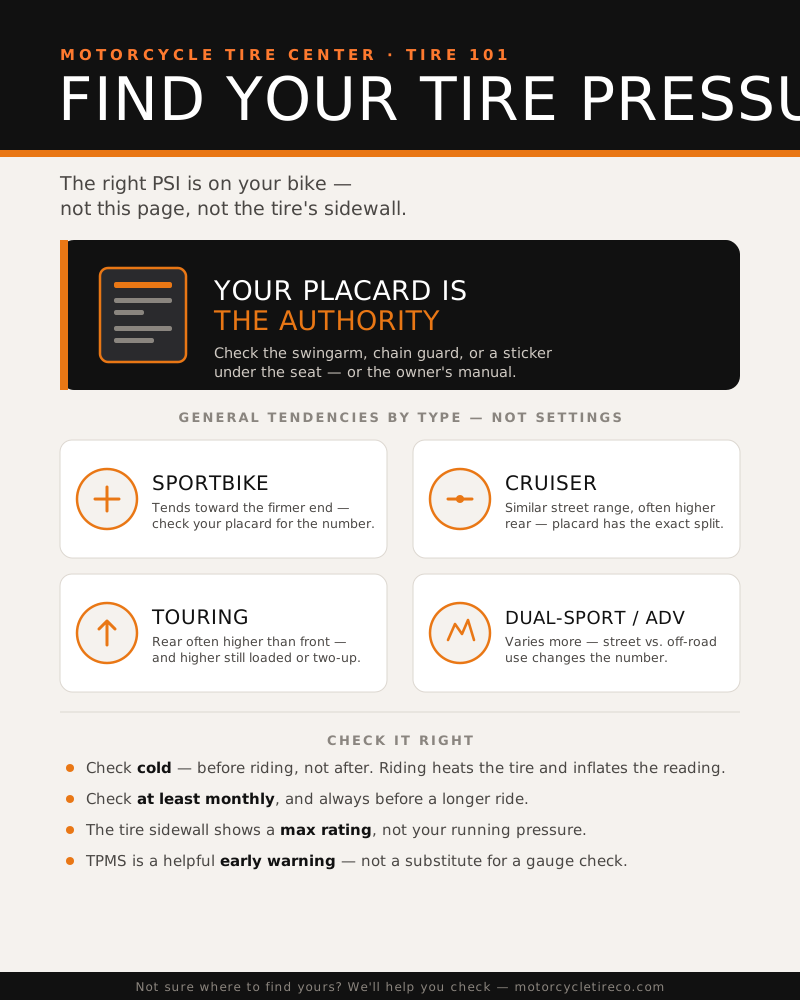
Before any guidance on this page: the correct tire pressure for your motorcycle is the one printed on your bike's placard or listed in the owner's manual — not a number from a website, a tire shop, or even this guide. Everything below explains why pressure matters, but your placard is the only source you should actually set your tires to.
Why Correct Cold Pressure Matters
Tire pressure affects almost everything about how your motorcycle rides and how long the tires last:
- Grip — the wrong pressure changes your contact patch shape, which changes how the tire grips in corners and under braking.
- Wear — under-inflation wears the edges of the tread fast and builds heat; over-inflation wears the center and can make the ride harsh and reduce grip.
- Mileage — correctly inflated tires simply last longer; incorrect pressure is one of the biggest avoidable causes of early tire wear. See How Long Do Motorcycle Tires Last?
- Safety — significantly under-inflated tires build excess heat, which can lead to a blowout, and both under- and over-inflation change how the bike handles in an emergency. This is not a “close enough” number — get it right.
The One True Source: Your Bike's Placard or Manual
Every motorcycle manufacturer specifies a cold tire pressure for that specific bike, tire size, and load condition — and it's usually printed right on the bike:
- Look on the swingarm, chain guard, frame, or a sticker under the seat for a placard listing front and rear pressure.
- If you can't find it, check the owner's manual — pressure is standard information there.
- If you've lost the manual, the manufacturer's website or a dealer can usually confirm the spec for your exact model and year.
This is the number to use. Not a range from the internet, not “what feels right,” and not necessarily what's printed on the tire's sidewall — the sidewall shows the tire's maximum pressure rating, which is a ceiling, not your bike's recommended running pressure. Your bike's placard is what matters.
General Tendencies by Type (Not Settings)
To be clear about what this means: these describe broad tendencies to help you understand the landscape — not numbers to set your tires to. Actual bike weight, tire size, load, and manufacturer spec all move the real number, sometimes significantly, even within the same category.
- Sportbikes — tend to run toward the firmer end of the typical street-motorcycle range, reflecting lighter weight concentrated over a smaller contact patch and an emphasis on precise handling.
- Cruisers — often run pressures in a broadly similar street range, sometimes adjusted higher at the rear to account for the bike's weight and typical load.
- Touring bikes — frequently specify higher rear pressure than front, especially loaded, because touring bikes carry more weight (rider, passenger, luggage) over the rear tire.
- Dual-sport / adventure bikes — pressure can vary further depending on street vs. off-road use, with lower pressures sometimes used off-road for grip and higher pressures for pavement.
We deliberately don't publish specific pressure numbers per category — the risk of a reader treating an illustrative number as “my number” is exactly the liability this page exists to avoid. The categories above describe tendencies, not settings. Your placard is the setting.
Solo vs. Two-Up / Loaded Touring Adjustments
Many manufacturers specify different pressures for solo riding versus two-up or fully loaded touring — usually a higher rear pressure (and sometimes front) when carrying a passenger, luggage, or both. Added weight changes how the tire flexes and manages heat.
- Check your placard or manual for a loaded/two-up pressure spec — many touring and sport-touring bikes list one explicitly.
- If your bike doesn't list a separate loaded spec, that itself is information — not every bike needs one, but don't assume; check.
- Adjust before the loaded ride, and set back to solo pressure afterward if you're not always riding loaded.
Cold vs. Hot Readings — and How Often to Check
Always check pressure when the tires are cold — meaning the bike hasn't been ridden for at least a few hours, ideally first thing before riding. Riding heats the air inside the tire and raises the reading, so a “hot” check gives you a falsely high number and you'll end up under-inflated once the tire cools back down.
- Check pressure at least monthly, and always before a longer ride.
- Motorcycle tires can lose pressure gradually over weeks even with no puncture — a monthly check catches slow leaks before they become a problem.
- If you find yourself needing to add air often, that's worth having the tire and valve checked, not just topped off repeatedly.
Gauges & TPMS
- A dedicated tire pressure gauge (not the one built into a gas station air pump, which is often inaccurate) is worth having. Digital or analog both work — accuracy matters more than the type.
- TPMS (Tire Pressure Monitoring Systems) — some motorcycles come with one built in, and aftermarket kits exist for bikes that don't. TPMS is convenient for catching a slow leak on the road, but it doesn't replace a periodic manual check with a good gauge — treat it as an early warning, not your primary reading.
Frequently Asked Questions
What tire pressure should my motorcycle be?
Check your bike's placard (often on the swingarm, chain guard, or a sticker under the seat) or the owner's manual — that's the manufacturer's specified pressure for your exact bike and is the only number you should actually set your tires to. General ranges online are illustrative, not a substitute for your placard.
Should I check tire pressure cold or after riding?
Always check cold — meaning the bike hasn't been ridden for a few hours, ideally before you start riding. Riding heats the tire and raises the reading, so a “hot” check will read artificially high and leave you under-inflated once it cools.
How often should I check my motorcycle's tire pressure?
At least monthly, and always before a longer ride. Motorcycle tires can lose pressure gradually over weeks even without a puncture, so a regular check catches problems early.
Should I use a different tire pressure with a passenger or luggage?
Often yes — many manufacturers specify a higher pressure (usually rear, sometimes front) for two-up or loaded touring. Check your placard or manual for a loaded pressure spec, and adjust before a loaded ride.
Is the pressure printed on the tire's sidewall what I should use?
No — the sidewall number is the tire's maximum pressure rating, a ceiling for the tire itself, not your bike's recommended running pressure. Use your bike's placard or owner's manual instead.
Does a TPMS replace checking pressure manually?
Not entirely. TPMS is great for catching a slow leak while riding, but it's worth still checking with a good gauge periodically — treat TPMS as an early warning, not your only check.